Academy funding
West Germania in Transition
The project aims to integrate diverse archaeological sources from the area between the Weser, Rhine and North Sea into a new overall picture.
The term “the Germanic tribes” is often used. It goes back to the Romans, who used it to refer to all peoples living on the right bank of the Rhine, with whom they engaged in peaceful and military conflict. However, they were actually many independent tribes. In the area between the Weser, Rhine and North Sea, their social and economic development and their interaction with the Roman Empire in the first half of the first millennium AD can be traced.
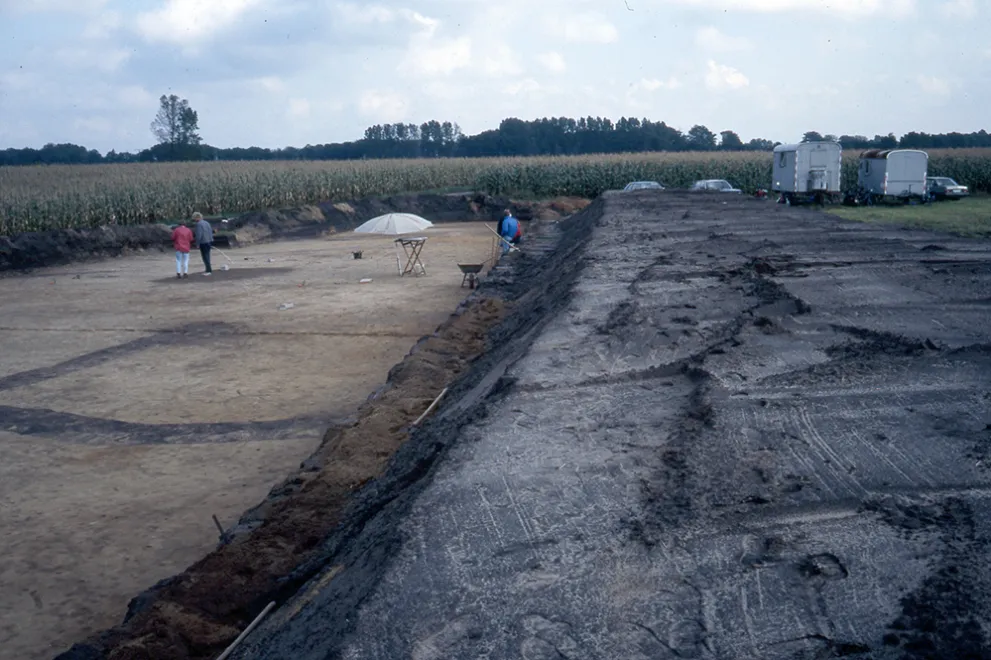
Numerous large-scale excavations in this area have yielded extensive new material in recent decades. However, the archaeological objects and structures unearthed in the process have hardly been published or analyzed to date. The project “West Germania in Transition – Edition and Multidisciplinary Research of the Northwest Germanic Cultural Landscape during the Roman Imperial Period (1st–4th Century)” wants to change this. The researchers plan to produce an edition of the objects, which have so far gone almost unnoticed. They also want to make the findings and archaeological sources available in a digital database.
The project is a joint project of the North Rhine-Westphalian Academy of Sciences, Humanities and the Arts and the Lower Saxony Academy of Sciences and Humanities in Göttingen. The funding amounts to around 10.7 million euros for 18 years and was granted in 2025. Ruhr University Bochum is implementing the project together with the University of Göttingen, which is the coordinator.