

Jan Baedke is Professor for History and Philosophy of Science at Ruhr University Bochum.
2025_12_09_baedke_herbarium_gentle.jpg
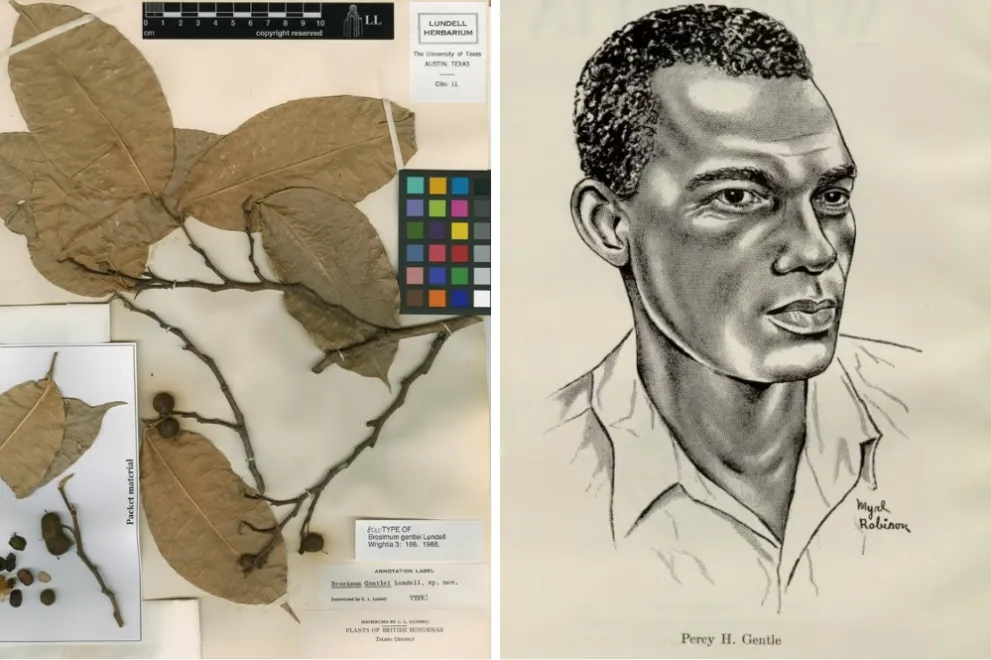
Links: Lundell Herbarium at the University of Texas at Austin. Rechts: Wrightia, Vol. 3, 1961: iii; The Biodiversity Heritage Library
ERC Consolidator Grant 2025
A History and Philosophy of Plant Collections
400 million plants are preserved in herbaria worldwide. As part of his ERC grant, Professor Jan Baedke is interested in the creators of these collections. He also investigates the problems that are associated with the collections’ current digitization.
Around 400 million plant specimens are preserved in herbaria worldwide – a treasure that has long been neglected. Today, the plants and their metadata are being digitized, genetically examined and the results are integrated with present-day environmental data – in the hope of learning from plants’ past evolution how crops can be modified and cultivated so that they remain usable despite climate change.
Professor Jan Baedke is interested in special aspects of herbaria: the names of local and often indigenous collectors. In his ERC project “Botanical Legacies: Towards a New History and Philosophy of Virtual Herbaria”, or BOTLEG for short, he and his team investigate who collected the herbarium specimens. Often these were not scientists, but indigenous actors who collected plants in their homeland on behalf of botanists from the USA or Europe. A single person may have contributed tens of thousands or even hundreds of thousands of specimens and thus countless pieces of biodiversity data to today’s herbaria.
Using methods of digital humanities, Baedke searches for local collectors in digitized herbaria, and for further information on these persons he visits archives. In two case studies, he takes a closer look at historical collections from the 19th and 20th centuries from the Yucatan Peninsula and Indonesia. On the one hand, these places are interesting because many crop wild relatives live there, i.e. plant species that are genetically close relatives to today’s cultivated plants. It may be possible to learn from them how crops can be better adapted to future conditions. On the other hand, these areas have a colonial history that interests Baedke.
In the BOTLEG project, Jan Baedke wants to reveal epistemic injustices experienced by local actors, for example whether they were not recognized as experts or whether their plant knowledge was suppressed or not disseminated. For modern research, it is relevant to know whether the injustice towards local collectors led to biases in their data, such as taxonomic or geographical bias, which can have an impact on how reliable this biodiversity data is and how it can be used for future predictions.

ERC Grant projects