


Neugierige Ratte
RUB
How the animals are kept at Ruhr University
Insights
We attach great importance to high standards in animal husbandry and care. Here is an insight into the keeping of birds, rats and mice at Ruhr University Bochum.
Mice
Mice are kept in small groups. Toys, hiding places and nesting material provide a stimulating environment.

Certain genetic traits are bred on site.

The mice are kept in small groups in these cages. Absorbent cotton, tubes, ladders or running wheels provide stimulation and activities.

In some rooms, each cage is ventilated separately. This prevents any pathogens that may have entered from spreading. All cages are computer-monitored. Animal keepers check the welfare of the mice daily.

The hygiene requirements are high. According to Felasa guidelines the mice are moved every few days and all accessories are thoroughly cleaned. The cages are put through a dishwasher cycle.

Behavioral experiments with mice allow us to better understand emotions and how they are processed in the brain. This allows conclusions to be drawn about the development of anxiety disorders.
Rats

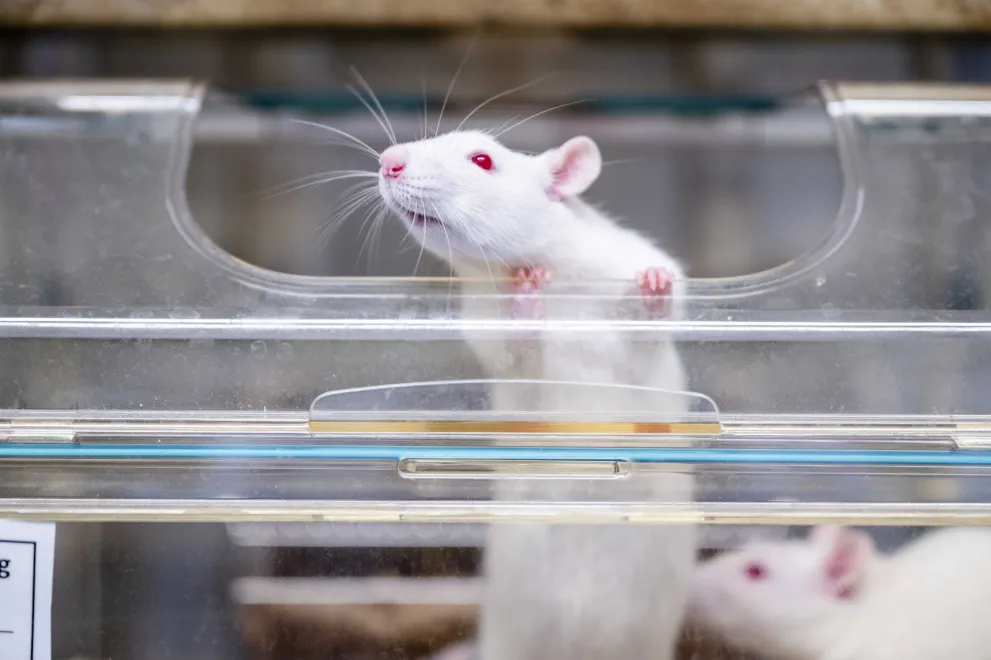
Like mice, rats are kept in small groups. Their cages are also equipped with nesting and play material.

Behavioral experiments with rats allow us to better understand emotions and how they are processed in the brain.
Birds

The pigeons come from breeders or from our own breeding.

The pigeons at the Ruhr University Bochum are kept in groups in a species-appropriate manner. They have free-flight aviaries and perching shelves and cages inside.

The pigeons are researched in behavioral experiments. By means of conditioning, they learn to solve tasks that allow us to gain insights into the functioning of their brains.

A small animal magnetic resonance tomograph makes it possible to investigate which areas of the pigeon's brain are active in certain experimental settings.
Fish farming was discontinued at the end of 2025.


Experimental animal research